
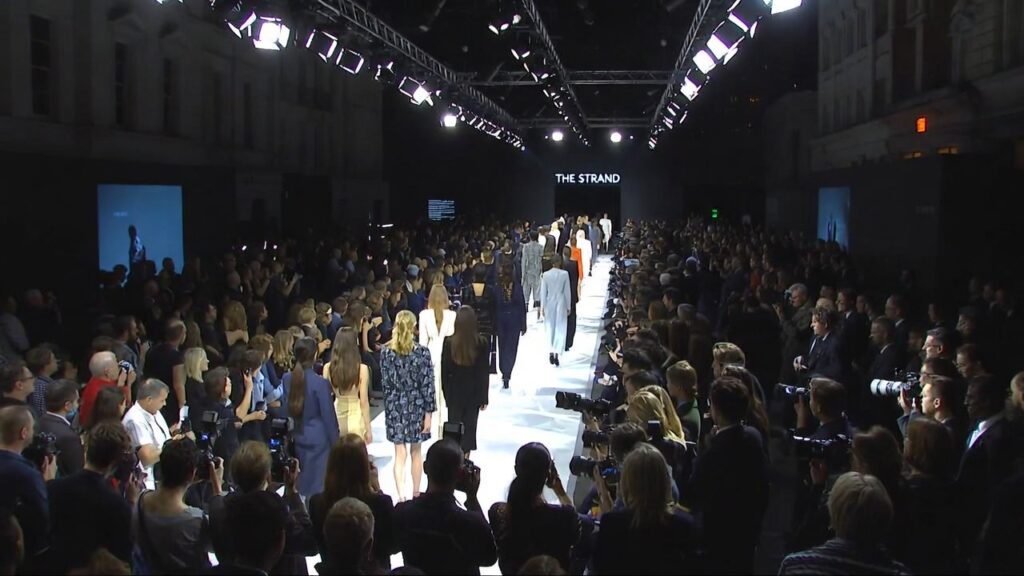
London Fashion Week has always been less about perfection and more about point of view.
This season, that instinct felt sharper than ever.
Behind the headlines and Instagram carousels, the real conversation wasn’t about hemlines or colours.
It was about London Fashion Week runway decisions the deliberate, sometimes risky choices designers made to remind the industry why London still matters.
From casting to venue selection, from silence instead of soundtracks to collections stripped of commercial safety nets, this season felt intentionally uncomfortable.
And that was the point.
The New Grammar of London Runways
London’s designers are rewriting their own rules.
Not loudly, not theatrically but with conviction.
What stood out immediately was restraint.
Several shows resisted overproduction, opting for sparse runways and unfiltered presentations. No pyrotechnics, no viral gimmicks. Just clothes and confidence.
This wasn’t minimalism for aesthetic reasons.
It was a statement against fashion fatigue.
Designers leaned into tailoring, deconstructed classics, and silhouettes that felt wearable without being safe. A trench wasn’t just a trench. A knit dress wasn’t just “day-to-night.” Everything had intent.
In a season where Paris chased grandeur and Milan chased polish, London doubled down on clarity.
That’s a runway decision worth noting.
Risk Over Reach: Why Designers Are Choosing Credibility
There’s a quiet rebellion happening in British fashion.
Designers are choosing respect over reach.
Several collections felt intentionally divisive.
Pieces weren’t designed to trend on TikTok or sell out instantly online. They were designed to challenge buyers, editors, and clients alike.
One recurring choice?
Awkward proportions.
Oversized shoulders paired with narrow trousers. Floor-length skirts with heavy footwear. Coats that swallowed the body instead of flattering it.
These aren’t mistakes.
They’re signals.
The message was clear: London Fashion Week runway decisions are no longer filtered through commercial anxiety. Designers want to be taken seriously again by museums, by fashion historians, by the people who understand references without needing explanation.
It’s fashion for the long memory, not the algorithm.
Casting, Styling, and the Power Shift on the Runway
Casting this season spoke volumes.
Age diversity wasn’t treated as a headline. It was normalised.
Models with presence, not just measurements, dominated several runways.
Hair and makeup followed suit.
Glossy skin replaced heavy contour. Hair looked lived-in, slightly imperfect, almost anti-editorial.
Stylists avoided obvious nostalgia. Instead of screaming “’90s” or “Y2K,” references were blurred. You couldn’t timestamp the looks and that’s precisely why they worked.
The industry has been stuck recycling its own past.
London seems determined to move forward without erasing its edge.
Even footwear told a story. Sensible shoes appeared unapologetically on luxury runways. Not ironic. Not styled “ugly.” Just honest.
Fashion, without apology.
The Gossip Everyone Whispered About
Behind the scenes, the chatter was relentless.
Several major British houses quietly scaled back budgets this season not out of weakness, but strategy. Fewer pieces. Fewer looks. Sharper editing.
One notable absence sparked speculation: a designer expected to show, didn’t. Industry insiders suggest the collection simply wasn’t ready a rare admission in an era obsessed with constant output.
Front rows felt less celebrity-heavy and more editor-focused.
A subtle but meaningful shift.
Buyers were reportedly paying closer attention than usual. When phones stay down and notebooks come out, you know something has landed.
London didn’t chase attention this season.
It earned it.
Where London Fashion Week Is Headed Next
If this season is any indication, the future of London Fashion Week will be quieter and stronger for it.
Expect more designers to opt out of spectacle.
Expect collections that prioritise longevity over virality.
There’s also a growing resistance to overexposure. Some designers are already hinting at fewer shows per year, slower production cycles, and tighter narratives.
London isn’t trying to compete with Paris or Milan.
It’s redefining relevance on its own terms.
And honestly?
That independence has always been its greatest asset.
Final Thoughts from the Front Row
What made this season compelling wasn’t any single look.
It was the confidence behind the choices.
These London Fashion Week runway decisions weren’t made to please everyone. They were made to say something quietly, clearly, and without compromise.
London fashion has never been about perfection.
It’s about perspective.
And this season proved that when designers trust their instincts instead of the noise, the runway becomes interesting again.
That’s a future worth watching.